Want to join our team?
Develop your career with us

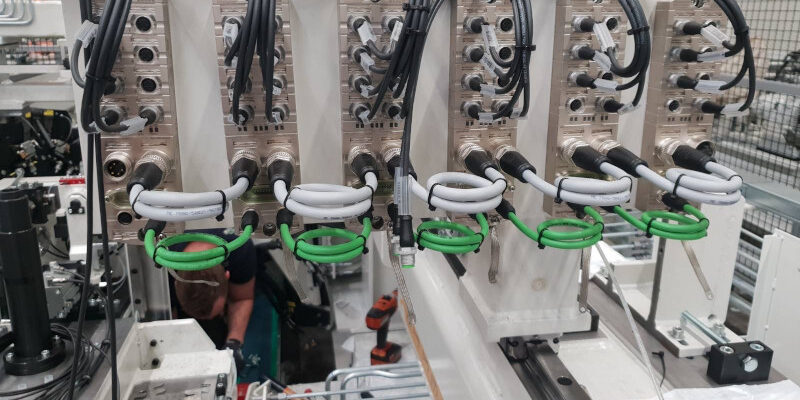
Work aesthetics is one of the key components of high-quality electrical installations in industry. Neatly routed cables, precisely aligned cable trays, clearly labeled conductors, and transparently organized cabinets are not just a matter of appearance, but also of safety, functionality, and long-term system reliability.
A professionally executed installation enables easier maintenance, faster fault diagnostics, and simpler future upgrades. Standardized labeling, proper bundling, and consistent adherence to technical documentation reflect the expertise and responsibility of the contractor.
In an industrial environment, aesthetics means order, precision, and a systematic approach – which is the foundation of the safe and reliable operation of any plant.


The installation of robotic and conveyor systems requires precision, technical discipline, and a thorough understanding of the process. Every cable, sensor, and actuator must be installed in accordance with project documentation, but also with a clear logic for future maintenance and servicing.
In robot cells, it is especially important to properly route power and signal lines, protect against mechanical stress, and precisely connect safety systems. In conveyor systems, the emphasis is on reliable communication between drives, position sensors, and control units.
A high-quality installation ensures stable operation, minimal downtime, and long-term system reliability. In the automation industry, execution precision directly impacts production efficiency.
The assembly and connection of electrical equipment represent a critical phase in the implementation of industrial systems, directly affecting the safety, reliability, and long-term stability of the plant. Each installation is carried out in accordance with project documentation, applicable standards, and technical specifications, with strict adherence to procedures and checkpoints.
Professional assembly includes the precise positioning and mechanical fastening of electric motors, frequency inverters, sensors, control units, and other electrical components, while electrical connection includes proper conductor sizing, labeling, connection verification, and ensuring protection against electromagnetic interference.
A systematic approach and technical discipline during execution ensure minimal risks, easier maintenance, and maximum operational efficiency of the industrial system.


The manufacturing and wiring of electrical cabinets require precision, technical expertise, and a complete understanding of the project documentation. Accurate reading of E-Plan is crucial for the correct positioning of components, conductor labeling, and connection execution in line with schematic diagrams and system functional requirements.
Knowledge of built-in components and applicable standards ensures the safety, clarity, and long-term reliability of the cabinet. In industrial and international projects, the UL standard is often applied, defining strict requirements for the design and safety of electrical cabinets.
A well-built cabinet is the foundation for the stable and reliable operation of the entire plant.
Develop your career with us

No products in the cart.